
Introduction
For the first time in nearly a century, British Columbians have elected a Conservative government ending a nine-year reign of the New Democratic Party (NDP). With a turnout of 48%, the Conservatives have managed to obtain the second largest majority in BC history being able to grow their electoral presence from nearly 2% of the vote in the 2020 BC Election, to re-entering the legislature in 2024 as the official opposition with 43% of the vote, to a majority government with over two-thirds of seats and 48% of the vote this weekend. This election, held two years ahead of schedule at the behest of the now outgoing NDP Premier David Eby, is a pivotal moment for provincial politics and provides a potential for a seismic shift in what policy looks like in beautiful British Columbia.
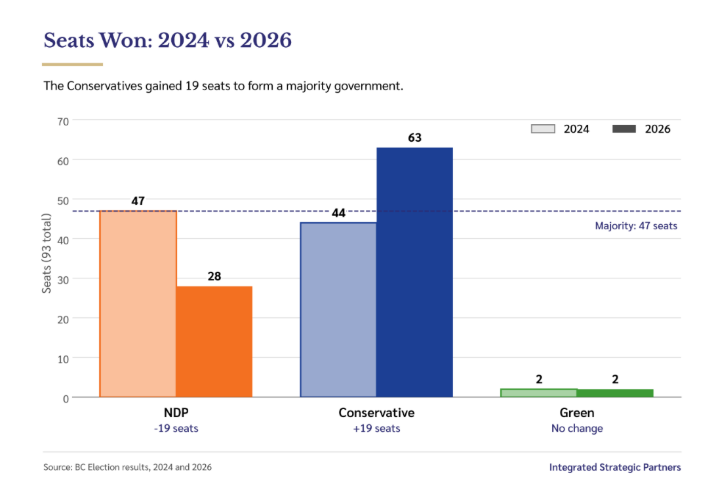
- Premier-designate Lorne Doerkson will be leading a Conservative government of 63 MLAs; compared to the opposition NDP caucus of 28 and the 2-member caucus of the Green Party.
- The Conservative platform centres on affordability, prosperity, health, safety, and a strong and proud BC, focusing on tax cuts, red tape reduction, economic growth, and social issues.
- Premier David Eby has announced his resignation as leader of the NDP, opening the party to new leadership.
Election Result Breakdown
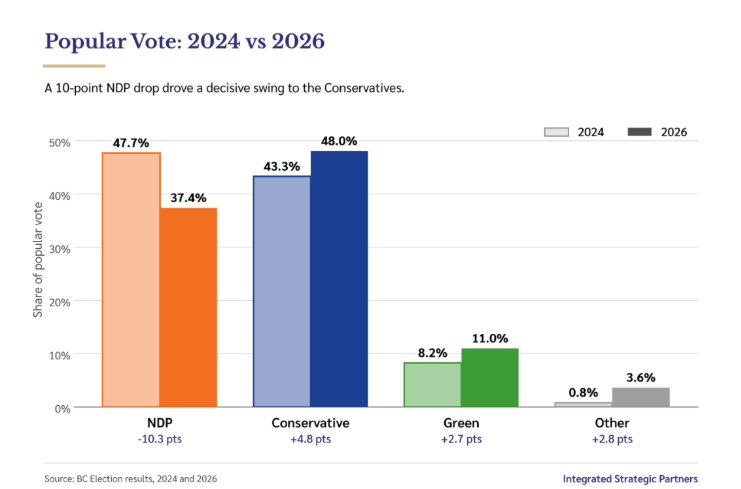
The NDP saw a 10-point decrease in their share of the popular vote between the 2024 and 2026 elections, resulting in a 19-seat reduction. The Conservatives were able to gain what the NDP lost with a 5-point popular vote increase between elections. The Greens were able to maintain their two seats in the Legislature while receiving a modest 3-point increase. Rival political parties on the political right, the newly founded CentreBC and OneBC, came in a distant third and fourth.
Election Result Breakdown
The Agenda
The Conservatives platform of five pillars targeting affordability, prosperity, health, safety, and a strong and proud BC describe a government that intends to move first on the levers it controls directly: taxation, permitting, and the legislative framework governing land and resource decisions. Premier designate Doerkson has already signalled the sequence, committing to open the books through an independent review before tabling a budget, to introduce the bill raising the personal income tax exemption, and to bring the repeal of DRIPA forward in the spring session. That ordering places the fiscal reset and the most contested legislative change ahead of the spending commitments, which the platform phases in over a full term.
New Faces in the Legislature
Both parties now face leadership questions. David Eby offered his resignation as Premier and as leader of the BC NDP on election night, accepting full responsibility for a snap election that cost his party 19 seats, although he held his own seat. The NDP will need to name an interim leader and set the terms of a leadership contest, and that choice will determine how the party approaches its first term in opposition against a government with a two thirds majority.
On the government side, Lorne Doerkson enters the Premier’s office through an unusual route. A former newspaper publisher and financial advisor first elected in 2020, he was named interim leader days before the election was called, and the party’s constitution bars an interim leader from seeking the permanent leadership. With a decisive mandate and no visible internal challenger, a membership vote to amend the constitution is the most likely resolution, and it would confirm Doerkson as permanent leader of a 63 member caucus.
Considerations
A Conservative government in British Columbia marks a pivotal moment in the history of the province. With an end to a nine-year reign for the NDP, the party will need to select a new leader with the resignation of Premier David Eby as leader. The Conservative government will enjoy a strong electoral mandate with a large majority in the legislature, a distinct and clear platform that will translate to policy deviating from the left of centre politics that has dominated the province. While Premier-designate Doerkson will be leading a government under blue Conservative banner, a green-in-experience caucus and cabinet will have the opportunity to provide the change that British Columbians clearly demanded in this election.